Wool Underpants
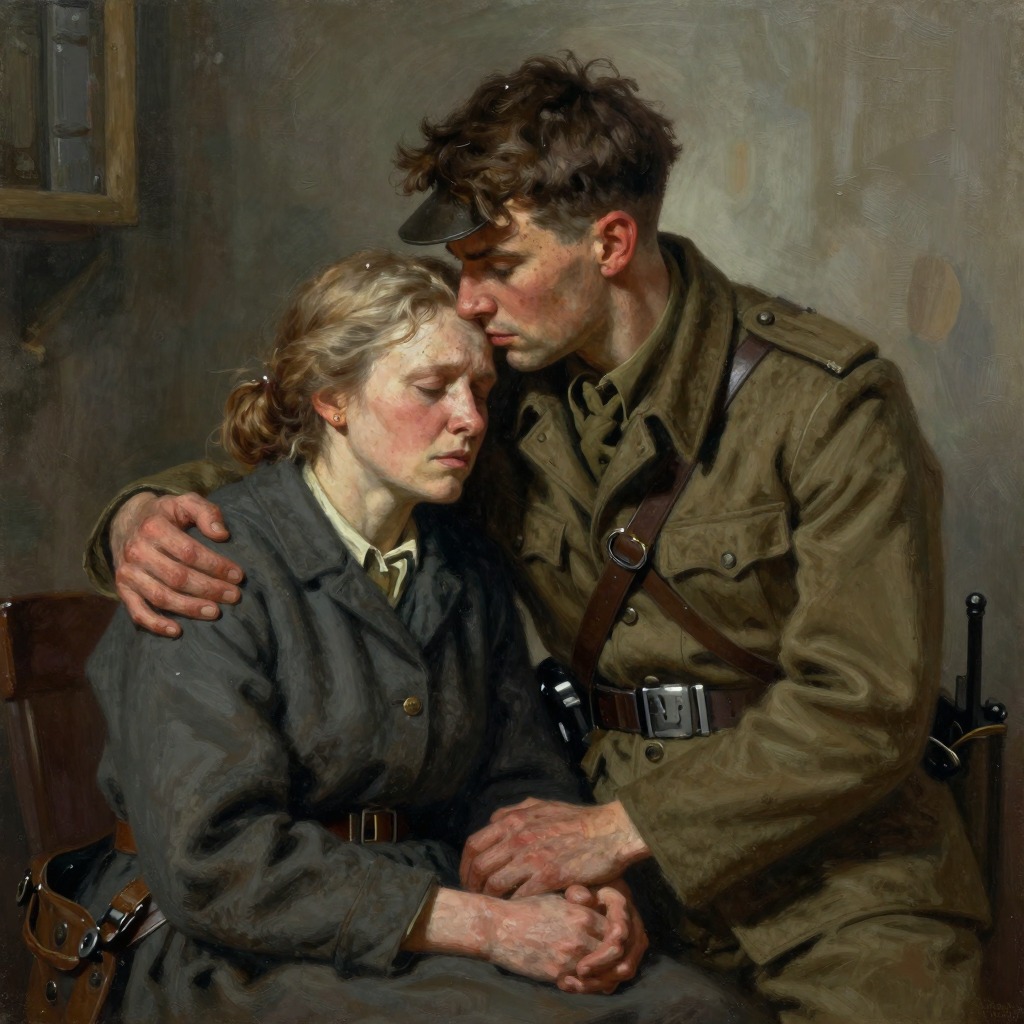
The wool underpants that Paul Bäumer receives from his mother during his leave are one of the most quietly devastating objects in the novel, a homely garment that carries the full weight of a mother's love, her physical suffering, and the desperate poverty of the home front. They are not a piece of equipment but a relic of sacrifice, and their appearance in the story marks a moment of profound emotional exposure for the narrator.
Identity and Origin
The underpants are made of pure wool, a detail that immediately signals their value in a wartime economy where such materials were scarce and rationed. Paul's mother does not simply buy them; she acquires them through a process of waiting, walking, and begging, a fact that Paul understands with a pang of guilt and sorrow. He knows "what these under-pants have cost you in waiting, and walking, and begging" . The garment is thus the product of her physical labor and her relentless, anxious care for a son she fears she will never see again. She presses them on him during their last night together, insisting, "They are all wool. They will keep you warm. You must not forget to put them in your pack" . The instruction is both practical and desperate, a mother's attempt to shield her child from the cold of a world she cannot protect him from.
Context of Deprivation
The underpants exist within a broader landscape of scarcity that defines Paul's leave. His mother is bedridden with cancer, and the family's poverty is acute. Paul brings home what food he can scavenge from his rations—an Edamer cheese, army bread, butter, livered sausage, dripping, and rice —and these provisions are received with a gratitude that shames him. The family's diet is meager, and Paul's father works late into the night at a desk job, eating "miserable rubbish" to save money for his wife's medical bills. In this context, the wool underpants are not a luxury but a necessity that the family can barely afford. They represent the same kind of sacrifice as the jar of preserved whortleberries that Paul's mother has saved for months , or the potato cakes she cooks for him despite her pain .
Emotional and Thematic Significance
The underpants trigger one of the novel's most raw and vulnerable passages. As Paul lies in his childhood bed, he is overwhelmed by a sense of his own helplessness and the impossibility of communication between his world and his mother's. He thinks, "Ah! Mother, Mother! how can it be that I must part from you? Who else is there that has any claim on me but you" . The underpants become the focal point of this anguish, a concrete object that embodies everything he cannot say. He bites into his pillow and grasps the iron rods of his bed, concluding, "I ought never to have come on leave" . The garment, intended to provide warmth and comfort, instead becomes a source of torment, a reminder of the gulf between the soldier's hardened exterior and the civilian's capacity for love and grief.
Contrast with Other Objects
The wool underpants stand in stark contrast to the other objects that circulate among the soldiers. Kemmerich's boots are coveted for their practical value and are passed from one dying man to the next with a cold pragmatism that Müller embodies. The underpants, by contrast, are not an object of exchange or utility in the field; they are a private, almost sacred gift from mother to son. They belong to the world of home, of care, of the body's vulnerability—a world that the war has rendered alien and inaccessible. When Paul returns to the front, he carries the underpants with him, but they cannot shield him from the horror that awaits. They remain a silent testament to the love that persists in a world bent on annihilation.